
The trip to Samarkand from Tashkent is a journey back to the 15th century. Courtesy of a 20th century Soviet rail network. Aboard the speed and luxury of a 21st century Spanish bullet train. Any sensible tourist these days will use the train to get about Uzbekistan. They’re so reasonably priced, you’ll quite possibly treat yourself to Business or VIP class.
The service is reliable too. While Britain’s railways melted and buckled recently in temperatures between 30 to 40 degrees, the Uzbek service kept going as temperatures soared above 45C without missing a beat, whisking passengers from the east of the country to the sparsely populated western region at speeds of up to 160mph.
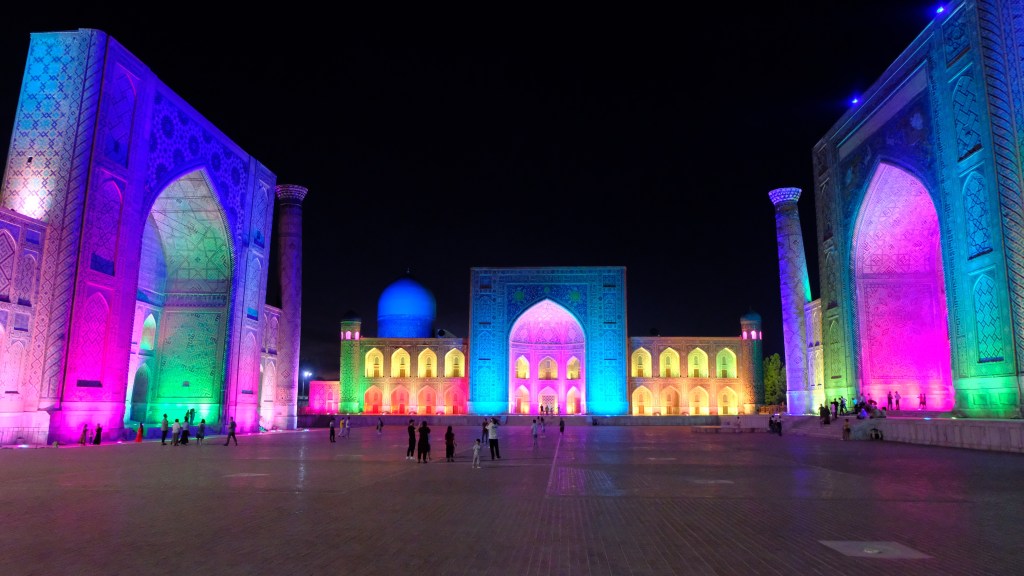
Our first stop? We were safely deposited at the grand old train station in Samarkand little more than three hours after departing the capital. We jumped in a taxi and just a half hour later and we were admiring the majesty and grandeur of the Registan, the oldest parts of which were built up to 600 years ago.


Majesty and grandeur are definitely appropriate adjectives. As is pristine. In fact, almost all of the old heritage sites in Uzbekistan look wonderfully preserved. But restored is a better word to use. That’s quite a story in itself, and is an ongoing process. Every now and then, you come across some dedicated folk heaving bits of tile up some rickety looking scaffolding.
Samarkand is a sizeable metropolis of nearly a million people, and its a really rather lovely place. There are hotels and guest houses for all budgets and styles. We chose an historic old Jewish traders house, now turned into a hotel. It’s nice to tread in the footsteps of other travellers who have trod this path before us. In particular, Joanna Lumley, who stayed here a few years ago. Her photo is proudly displayed on the hotels booking page.
Samarkand is a feast of madrasas, mosques, blue domes, bread shops, mausoleums, sound and light shows, shops selling tourist tat and stalls selling silk products, both real and fake. Historically, the big draw is Amir Timur, the driving force behind the surprisingly expansive, and unsurprisingly bloodthirsty, Timurid Empire. He is venerated in Tashkent, but it is Samarkand that he called home, where he is laid to rest and where the statue frenzy gets real.
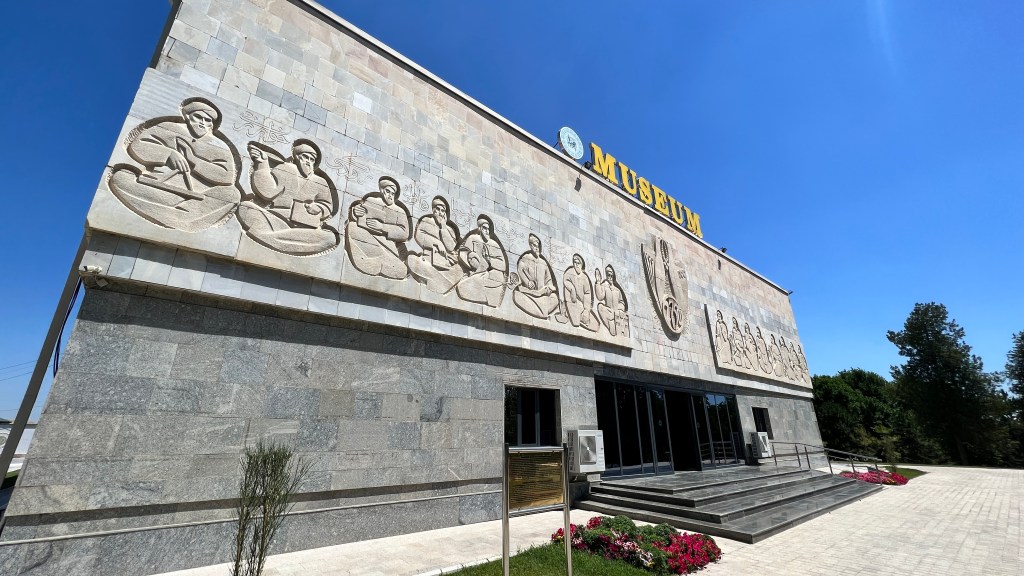
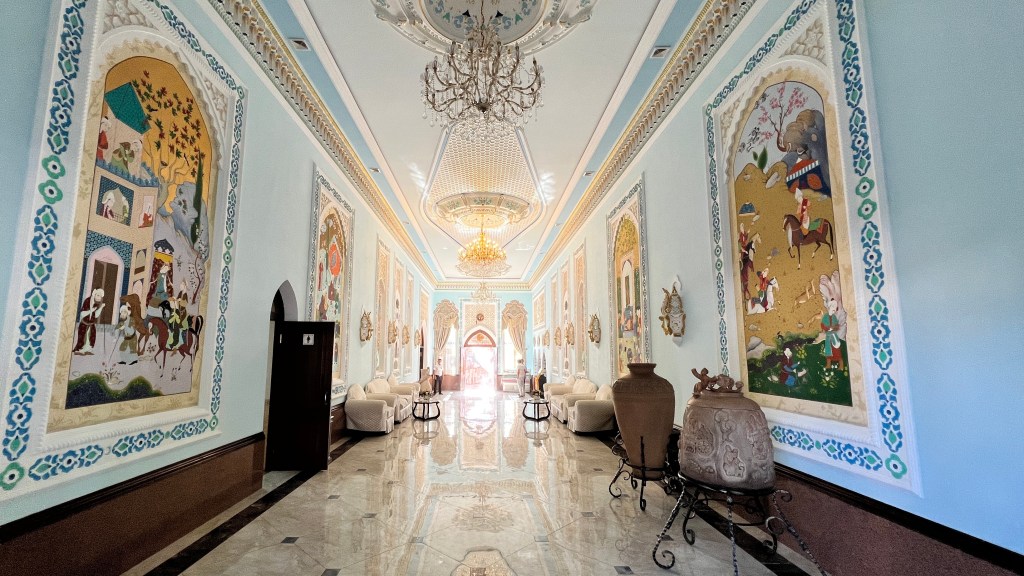

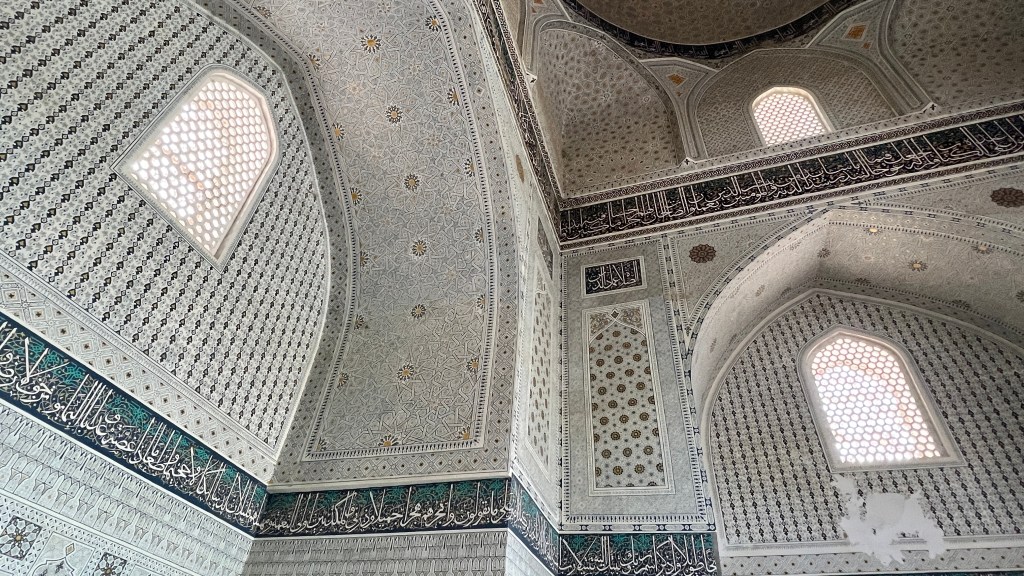

There’s a rather fancy mausoleum for Islam Karimov too. He was Uzbekistan’s final First Secretary as an SSR state. And the first post-Soviet president, ruling until his death in 2016. His face and figure has been cast in metal and put on pedestals here and there. It’s not all just about Amir Timur. Indeed, I couldn’t help but feel there was a conscious decision at some point that Karimov should be competing with Timur on an equal footing for the people’s affections.
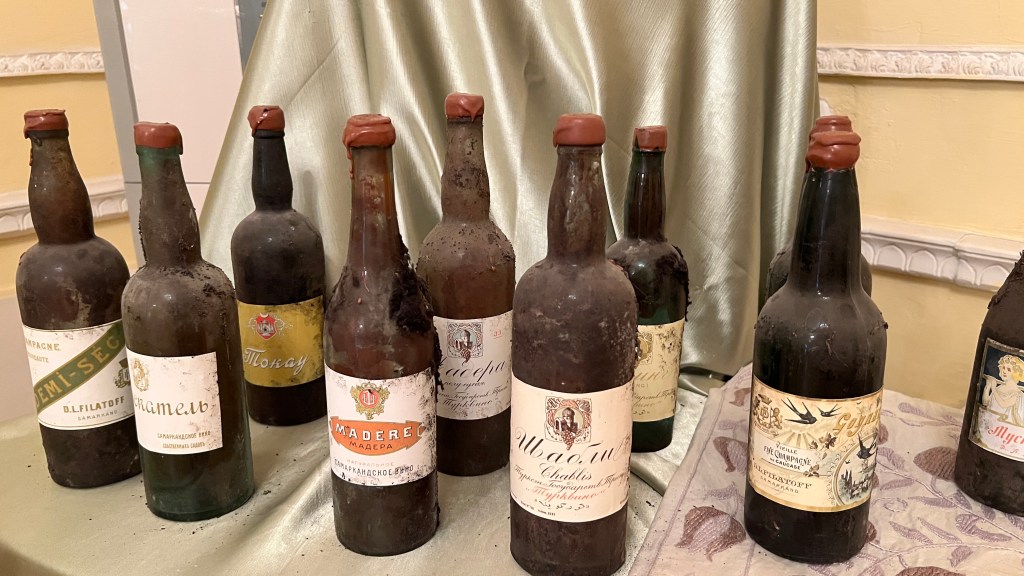
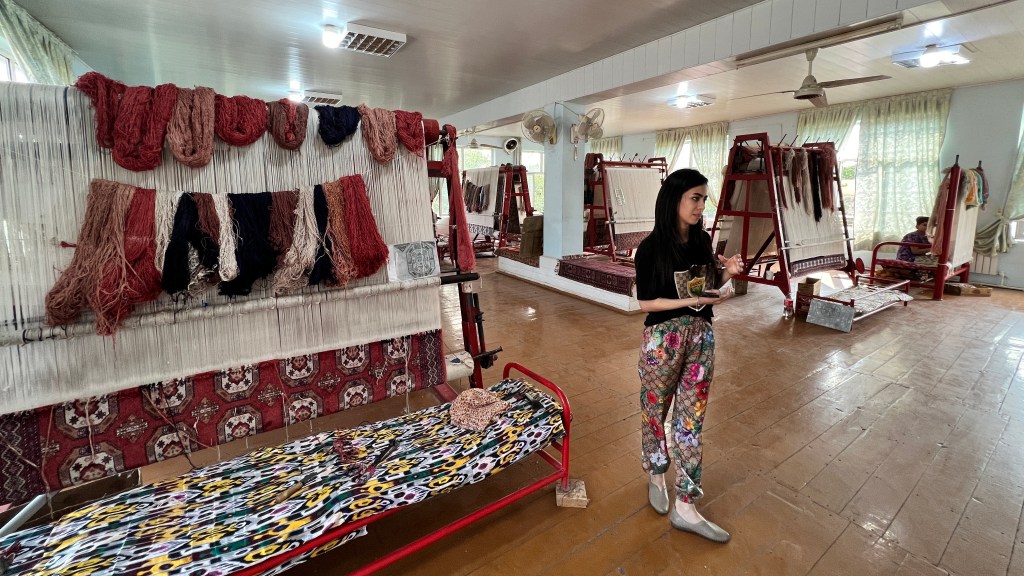
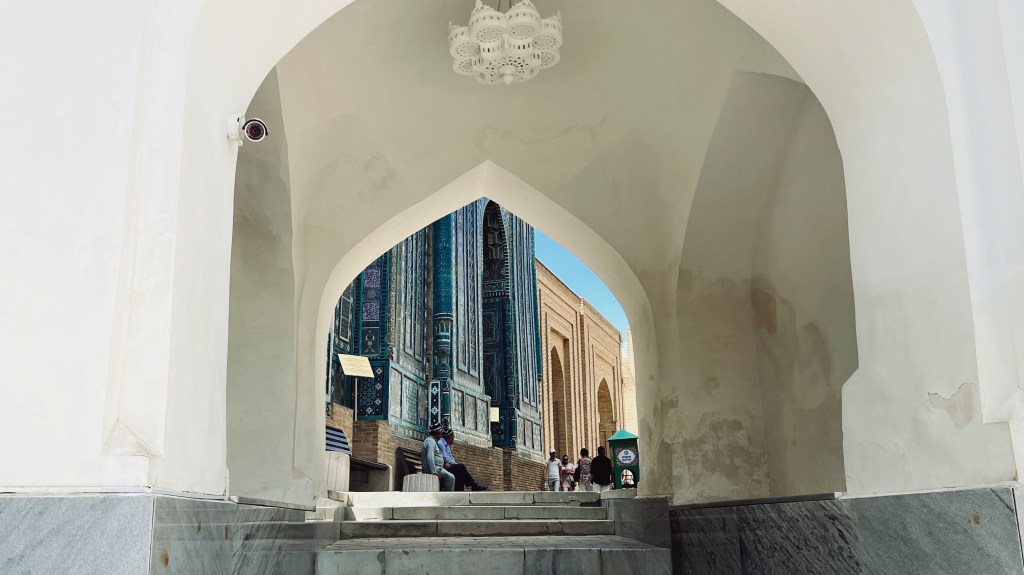
There’s plenty to do in Samarkand. Enough to fill several busy days. Aside from the Registan and the tour of Amir Timur sites and statues, there are several other ‘must sees’ that I should highlight. The Shah i Zinda necropolis is the most glorious collection of tombs and tiles that I’ve ever come across. The Silk Carpet factory tour was fascinating. The Afrasiab Museum told the fabulous tale of the Sogdians. The wine tasting tour? Ooh. You could probably give that a miss. Imagine syrup, tar and alcohol whisked together. But worse.
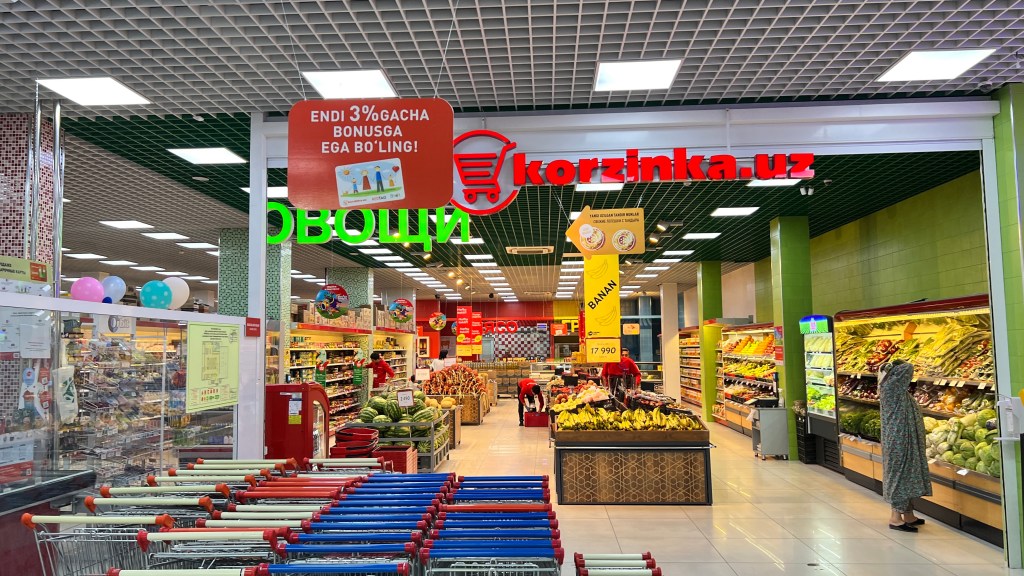
We also loved the modern Russian part of the city. Cafe Sogdiana helped us escape the burning heat of the midday sun, serving delicious ice cream in air conditioned luxury. It was so nice, we went back for a light dinner one evening. I rather like wandering through foreign supermarkets too, to see how the natives live. I was a smidgen tempted to purchase a tin of processed horse meat to bring back to Blighty and turn my work lunchbox into the talking point of the day. Alas, luggage space was tight, so it stayed on the shelf.
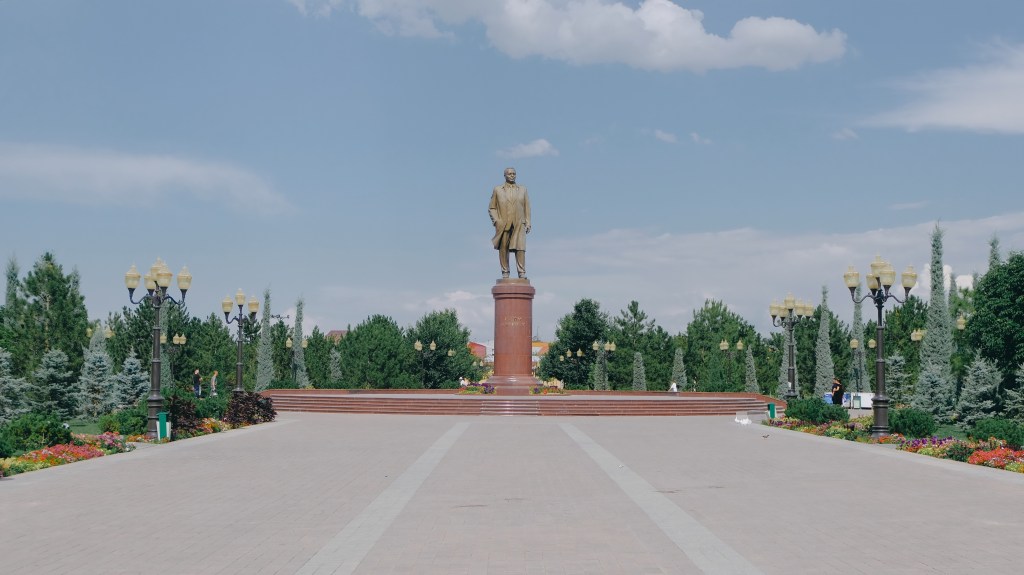
The next, and for us final, stop on the Silk Road was Bukhara. It’s a much smaller place than Samarkand. A town, not a city. It’s just a twenty minute walk from one end to the other end of the tourist zone. Or would have been, had the temperature not soared into the mid 40s. One lingers a little longer than planned in the shade of the trading domes and in the air conditioned cafes when the sun is operating on beast mode. But Bukhara wasn’t designed to be rushed anyway, in any weather. It exists for your pleasure. Lingering is a fine thing to do in Bukhara.
I must confess, I had expected to begin experiencing Mosque Fatigue by the time we got to Bukhara. You can have too much of a good thing. I’ve previously experience Pyramid Fatigue in Mexico, Buddha Fatigue in Sri Lanka and Temple Fatigue in Vietnam. But Mosque Fatigue never set in. Perhaps it was the heat, causing a physical fatigue that blunted any mental version. But each mosque and madrasa managed to bring something sufficiently different, unique, special to the table to keep my interest going.
Every structure was magnificent in its own way. At no point did I fear that disappointment lurked around the corner. And Bukhara throws in a few extras anyway. There’s the Folklore Fashion Show (must see), the Ark (minus a covenant), Trading Domes (get ready to haggle), a Viewing Tower (don’t look down) and the World’s Most Fabulous Shit Hotel* (don’t touch anything that looks electrical).


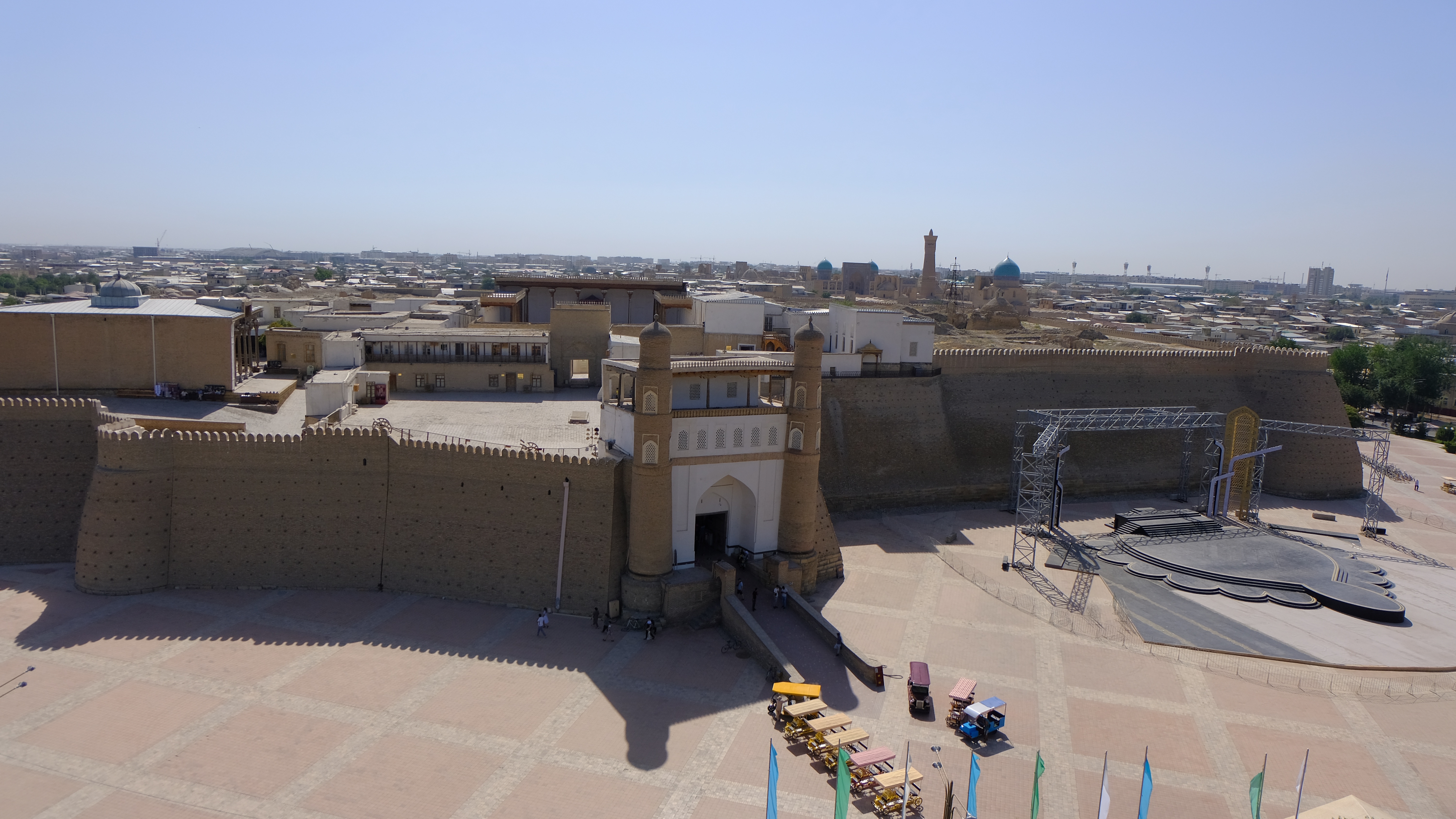

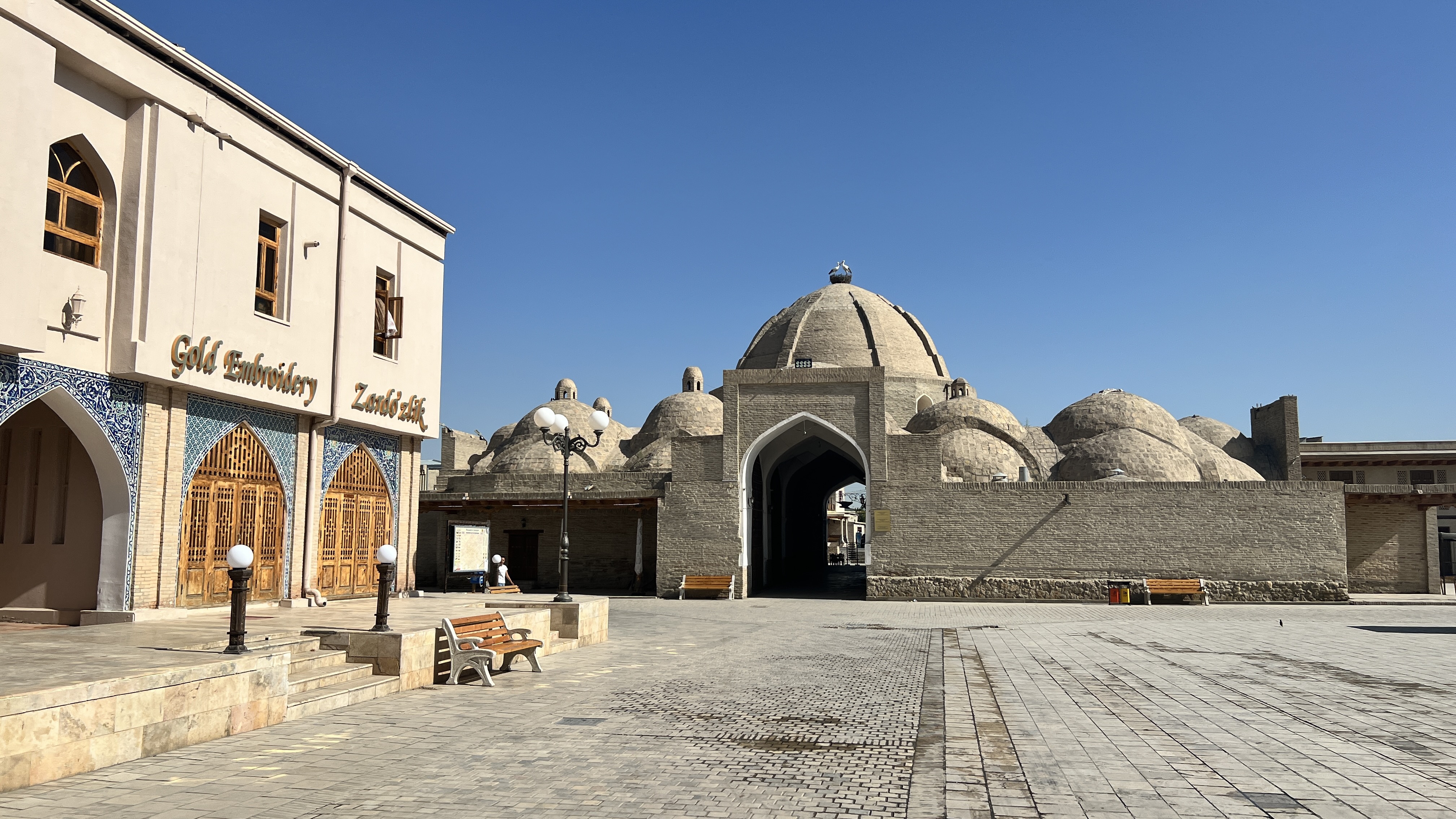
That’s my summary of the Silk Road as it is in 2022. Sadly, I didn’t get to Khiva. We had just eleven days in Uzbekistan, and to fit Khiva in without rushing you’d perhaps want two weeks. Also, you’d perhaps want to take an old Soviet night train back to Tashkent, and Mrs P was having absolutely none of that, so it was off our itinerary, rushing or no rushing. Also, I’m getting a bit old, so I go nowhere in any great rush if I can help it.
Obviously, the internet is chock full of better guides and reviews than I can offer, with far more wisdom, far more detail and long lists of invaluable information about the Silk Road. Everything I’ve written here gives you just a taste of my personal adventure, and my photos a quick peek inside the borders of the country. Nothing more.
But I do have two terribly important things to say. First up, Uzbekistan is incredibly accessible. Most folk need no visa at all, whilst others can get a cheap and easy e-visa. No vaccination certificates are needed. Getting about inside the country is a breeze. English was surprisingly widely spoken. Google Translate is your friend on the odd occasion that it isn’t. And possibly the most important feature of accessibility, especially for single female travellers, is that its an exceptionally safe place to visit. There’s no reason not to go.
Secondly, Uzbekistan is fabulous, fun, fascinating, enlightening and the people we met were to a man (and woman) pleasant, interesting and interested in what we were up to, in a non-nosy way. More than once, a waitress or assistant did everything back to front and arse to face. But it was done with enthusiasm and a smile and I can roll with that. It’s a country that wants you to visit. There is every reason to book your trip today.
* Opened in 2019 as Bukhara’s number one luxury hotel, the Sahid Zarafshon is falling to pieces already. It’s all a bit Fawlty Towers. The swimming pool is missing countless tiles, and the roof above the pool is literally coming apart at the seams and falling into the water below. The anti-slip rubber edges on the stairs throughout the building have mostly either come off entirely or are hanging loose as trip hazards. The taps in our shower were loose, poking through a big hole in the tiling.
One corner of the floor in our room was mysteriously spongy – I may have been no more than one wafer thin mint away from plummeting into the room below. I touched a panel in the elevator which promptly fell off. But hey, we got a good price, the breakfast was excellent, we appreciated the pretense of grandeur and the ‘Guess What Falls Off Next’ game we played throughout our stay was hugely entertaining.
 The Mexile
That’s was a very interesting spotlight on Tashkent, your photos are superb too!
LikeLiked by 1 person
Thanks Colm!
LikeLiked by 1 person